
Background

Moticos is a seven-minute animated short film developed over 30 weeks. Working within a team of 10 creatives,
I tackled a diverse range of fabrication challenges, translating concept art and storyboard drawings into tangible, camera ready objects, using both traditional workshop machinery and digital fabrication tools.
Key Responsibilities:
-
Scenic Fabrication: Fabricated detailed environmental sets capturing rural Texas greenery and man-made structures, including scaled houses and telephone poles.
-
Hero Prop Construction: Collaborated in a four-person team to engineer and build the film’s central car prop. Designed the asset to accommodate character seating and integrated functional mechanisms to replicate realistic vehicular movement.
-
Material and Tool Mastery: Utilized a broad spectrum of mediums including MDF, rigid polyurethane foam, and textiles. Operated specialized equipment ranging from digital fabrication (3D printers, laser cutters) to heavy workshop machinery (Festool systems, bandsaws, and chopsaws).
Currently being submitted to Film Festivals
Car Fabrication
Final Car
Collaborated with Tess Smigel, Mary Mihalko, and Sal Asimos to fabricate the hero vehicle prop. Personally responsible for fabricating the wheels, bumpers, and taillights, as well as executing the finish painting and weathering for the lighting elements. Additionally, managed the technical pre-production pipeline by preparing the 3D-printed vehicle components for mold-making and casting


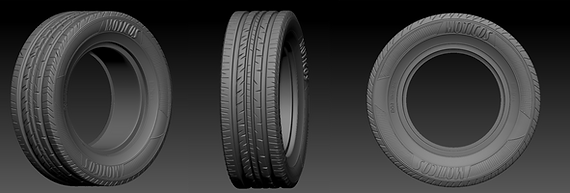
Wheel and Hubcap
Tire detailing was achieved through the use of ZBrush. Meanwhile, the hubcap was hard-surface modeled in Autodesk Maya 2024.
Tire and hubcap final film clips.


Partnered closely with the car's suspension designer, Tess Smigel, to ensure the wheel assets could rotate smoothly on the rig. Pivotally adapted the design from a fully detachable multi-part assembly to a unified structure using Zap-a-Gap before molding, streamlining the build once detachable functionality became obsolete for the production.
3D printed tire and hubcap.
Front and Rear Bumper
Because the 3D-printed chassis components were undergoing priming and physical finishing, I incorporated a safety tolerance margin into the bumper fabrication to account for material variation. Utilizing Sal Asimos’s 3D model to calculate the vehicle's final assembled dimensions, I selected rigid polyurethane foam to form the bumpers. This choice provided a lightweight, easily modifiable substrate that allowed us to pivot quickly between molding and casting the parts or leaving them as foam to meet tight deadlines.


Mechanical drawings

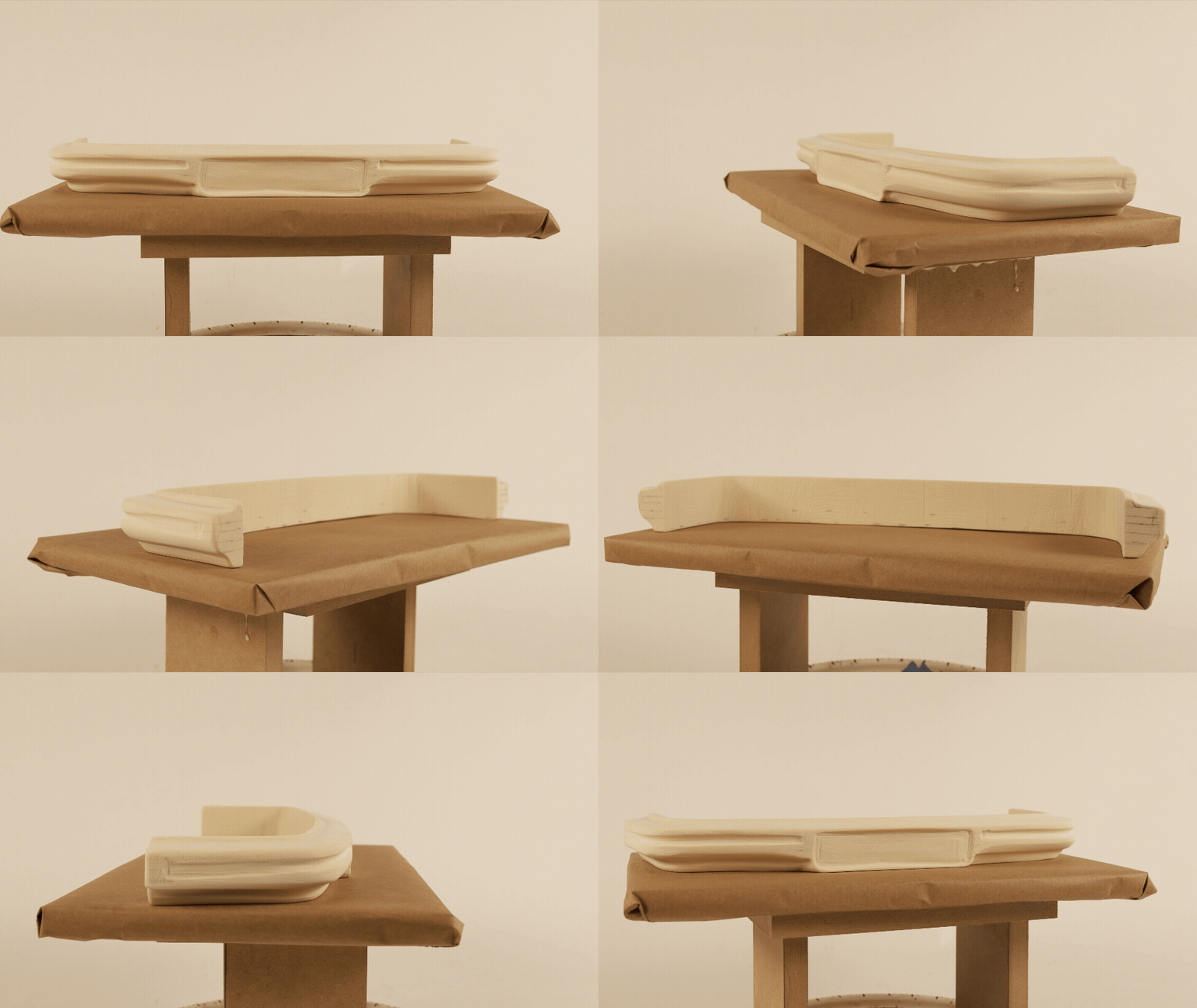
Rear Bumper Before Hero Car Was Finished
Front Bumper Before Hero Car Was Finished
Headlights and Taillights
Mold Making & 3D Processing
Plaster Mold for Foam Casting

Silicone Squish Mold For Plastic Pouring

Processing the FDM steering wheel to be ready to mold
Car Parts Processing and Casting

Mountains in Parallax

Scenic Fabrication
I constructed a continuous mountain range split across five independent backing boards using pink insulation foam. Adapting to workshop constraints with limited ventilation, I entirely hand-carved the topography using manual tools, meticulously shaping the slopes to achieve a rugged, organic geological texture. I salvaged and repurposed the foam scraps, carving them into individual rock geometry and gluing them back onto the main forms to add distinct structural depth. With limited access to a steady ventilation system, all the foam was hand-carved.

Telephone Pole Vignette


